
Recurring Order
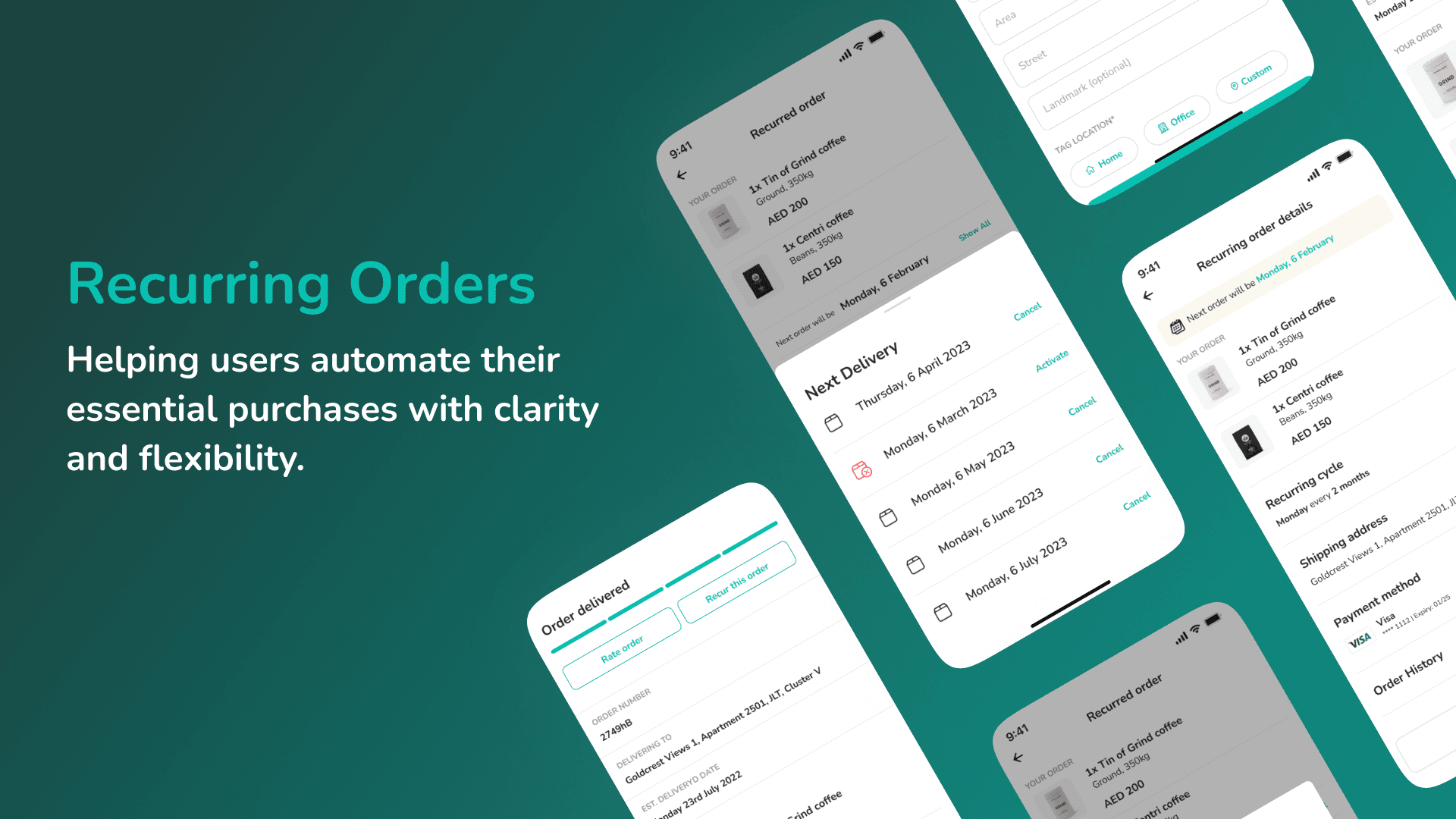
Due to NDA restrictions, I cannot share final production designs. This case study focuses on my process, approach, and the design exploration documented in my working files.
The challenge was to design a seamless recurring order experience that felt natural within the existing app flow, worked with various payment methods and schedules, and met regional expectations for subscription style services.
users were placing identical orders 3-5 times per week, wasting time and creating opportunity for competitors.
Low retention: Users who didn't establish habits churned within 30 days.
Complex scheduling: Different store hours, delivery zones, and menu availability required flexible recurring order logic.
Subscription hesitancy: MENA users showed lower trust in auto-charging features compared to Western markets.
As a UX Designer, I was responsible for:
Leading end-to-end design of the recurring orders feature.
Conducting user research to validate the concept.
Designing user flows for setup, management, and cancellation.
Working with product on business model and pricing.
Testing and iterating based on beta user feedback.
Creating design system components for recurring order UI
User Research Methods
1- Behavioral Analysis
Data Source - Analyzed 3 months of order data from 500+ users
What I was looking for - Order frequency, time patterns, menu consistency
Key finding preview - 40% of users ordered the same drink at the same time 4+ days/week
2- Competitive Analysis
Who I analyzed - Reviewed subscription models from Starbucks, Pret, regional apps
What I compared - Setup flows, scheduling options, cancellation policies
Key finding preview - Most apps over complicated setup; users wanted 2-3 taps max
Key Insights
Users wanted "habit automation" not "subscription commitment" - the mental model was different.
Transparency about next charge date and easy pause/cancel were non-negotiable for MENA users.
Users preferred "save my order" → "make it recurring" flow over upfront commitment.
Willingness to pay for delivery is high if order was guaranteed to arrive on time consistently.
Phase 1 - User flow mapping
I mapped out critical user journeys:
First-time recurring order setup
Entry points (from order confirmation, from profile)
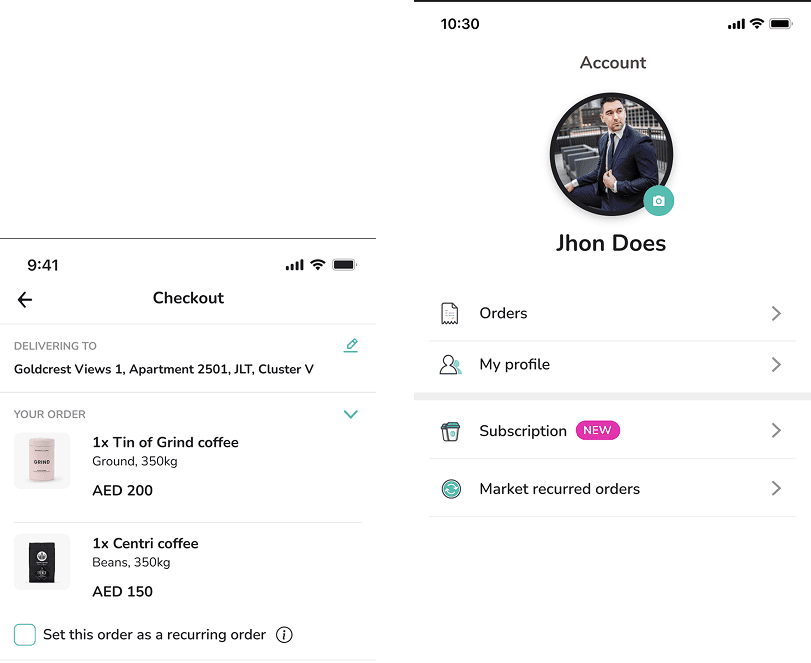
Decision points (frequency and schedule)
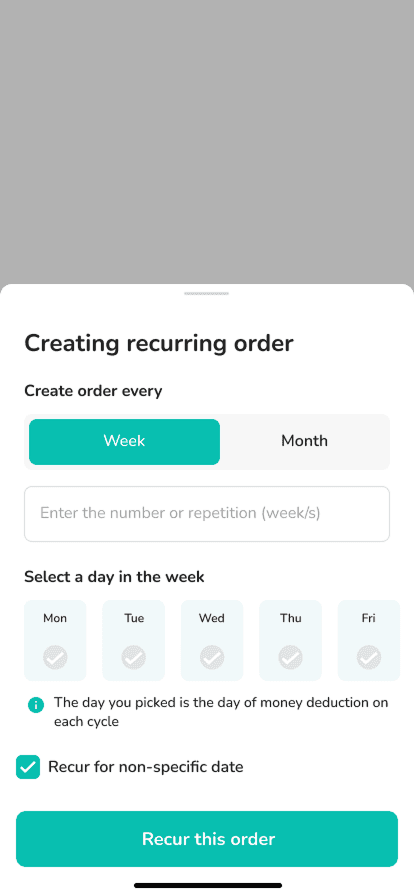
Managing active recurring orders
View upcoming orders
Pause/resume
Modify order or schedule
Cancel subscription
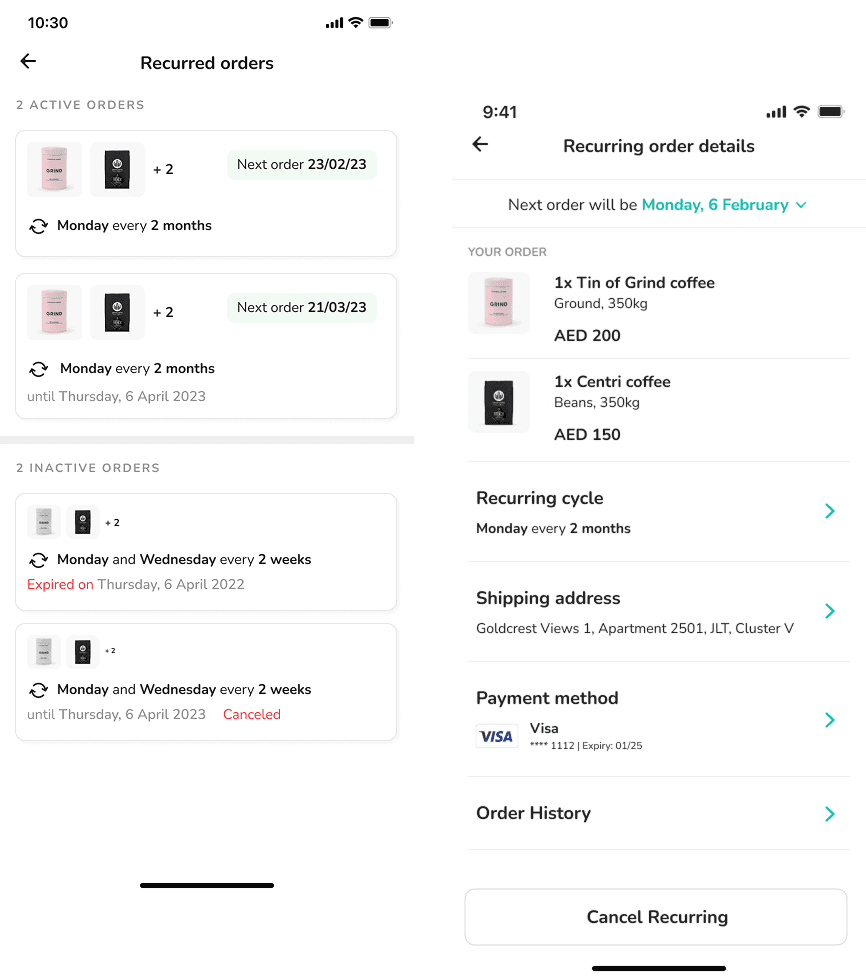
Phase 2 - Key Design Decisions
2- Cancellation Accessibility
Decision: Make "Pause" and "Cancel" equally prominent
Rationale: Traditional dark patterns (hiding cancel) would destroy trust in MENA market
Implementation: Both options always visible, one tap away
Trade-off: Potentially higher cancellation rate, but built long-term trust
3- Allow saved payment methods only (no cash on delivery for recurring)
Rationale: COD doesn't work for automated orders; needed reliable payment
Implementation: Smart prompts to save payment method during first-time setup
Trade-off: Excluded some users, but ensured reliable service for subscribers
Outcomes & Impact
While I cannot share specific metrics due to NDA, the recurring orders feature resulted in:
Strong adoption rate among target users, exceeding internal projections.
Significant increase in order frequency and customer lifetime value.
High satisfaction scores and positive qualitative feedback.
Predictable order volume helped stores optimize inventory and staffing.
Reflections
This project taught me that reducing friction doesn't always mean removing steps, sometimes it means adding the right reassurance at the right time. While we could have made setup even faster, the transparency elements (showing next charge, making pause/cancel easy) built the trust necessary for users to commit to recurring orders.
Working across multiple teams also reinforced how critical early alignment is. By involving engineering in the initial concept phase, we avoided technical debt and built a more robust solution that could scale as the feature evolved.
The regional cultural insights were perhaps the most valuable learning. What works for subscriptions in Western markets doesn't translate directly to MENA - users here value flexibility and control even more highly, and design patterns must reflect that to succeed.